A Message from Executive Director Ryan Noble: A new foundation for food security
Comments Off on A Message from Executive Director Ryan Noble: A new foundation for food security
Ryan Noble; Executive Director, North York Harvest Food Bank
Last month, North York Harvest Food Bank reached a major milestone: breaking ground on the construction of our new Community Food Hub.
By the end of the year, the Hub will become the home of our main offices and distribution centre. Three times larger than our current warehouse with a tenfold increase in cold storage capacity, this new facility is at the core of how we will address the rising demand for food assistance.
Over 40 years of community care have brought us to this pivotal next chapter—made possible by neighbours showing up for one another through countless volunteer hours, food and financial donations, and the simple yet profound decision to see a problem in our community and choose to be part of the solution.
If you’ve supported North York Harvest, you’ve helped build the foundation for everything that comes next.
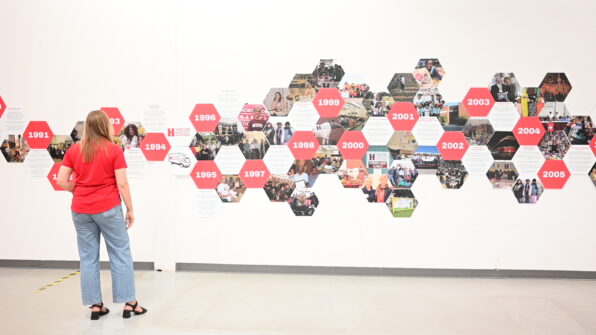
The Hub represents the next step in our collective reimagining of what our food bank really is – vital, community-oriented infrastructure. North York Harvest Food Bank came into being when a number of smaller programs and organizations realized that they could all benefit from a shared truck and warehouse space. Over the next four decades, those needs have continued to grow and evolve.
Building a stronger food system in Toronto
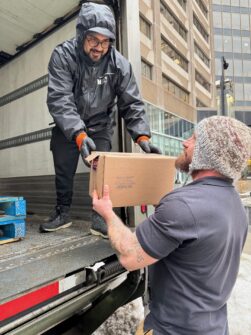
Today, our warehouse and transportation fleet, along with our planning and logistics systems, staff and volunteers support hundreds of nonprofit organizations all across southern Ontario. We maintain our traditional work of distributing donations through our network of partners, and have found new ways to leverage our capacity and capabilities in support of our community.
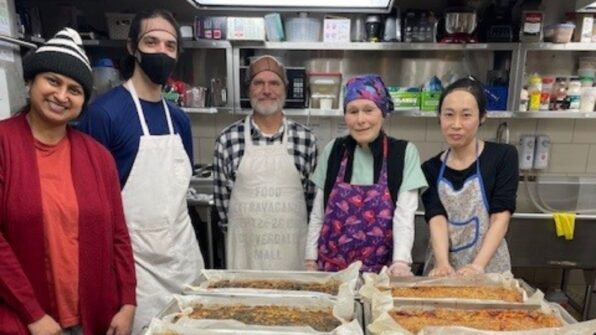
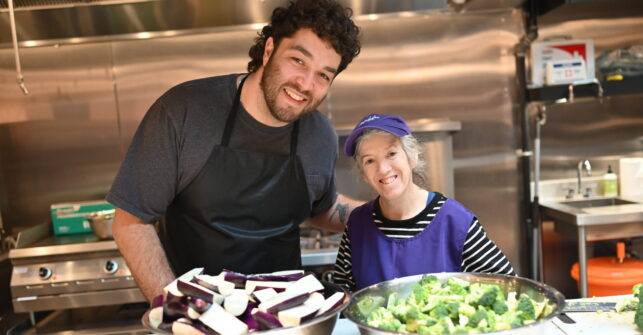
Your support has also helped us grow innovative solutions like FoodReach, our social enterprise that procures and delivers affordable food for shelters, schools, libraries and community meal programs. Pooling this purchasing power, we can lower food prices across the nonprofit sector, increase the amount of food assistance that we can provide while freeing up resources for community programming. Up to 70% of this food is grown or produced in Ontario, supporting local farms and manufacturers and helping to build a more resilient food system. By receiving, warehousing and distributing this food, it creates employment pathways for our clients through our Leadership in Logistics program.
Put together, our activities form a virtuous cycle; investing locally, generating income and creating jobs in our community through the way we distribute food and provide emergency assistance. Food insecurity is ultimately an economic challenge that requires an economic response. For North York Harvest, this starts with seeing ourselves as a vital piece of infrastructure, connected to the broader food system and local economy, and addressing the root causes of food insecurity.
The Community Food Hub will take this thinking to the next level, writing a new chapter for North York Harvest Food Bank as we move towards our vision of a community where everyone can meet their food needs.
Thank you for helping to write this next chapter with us.